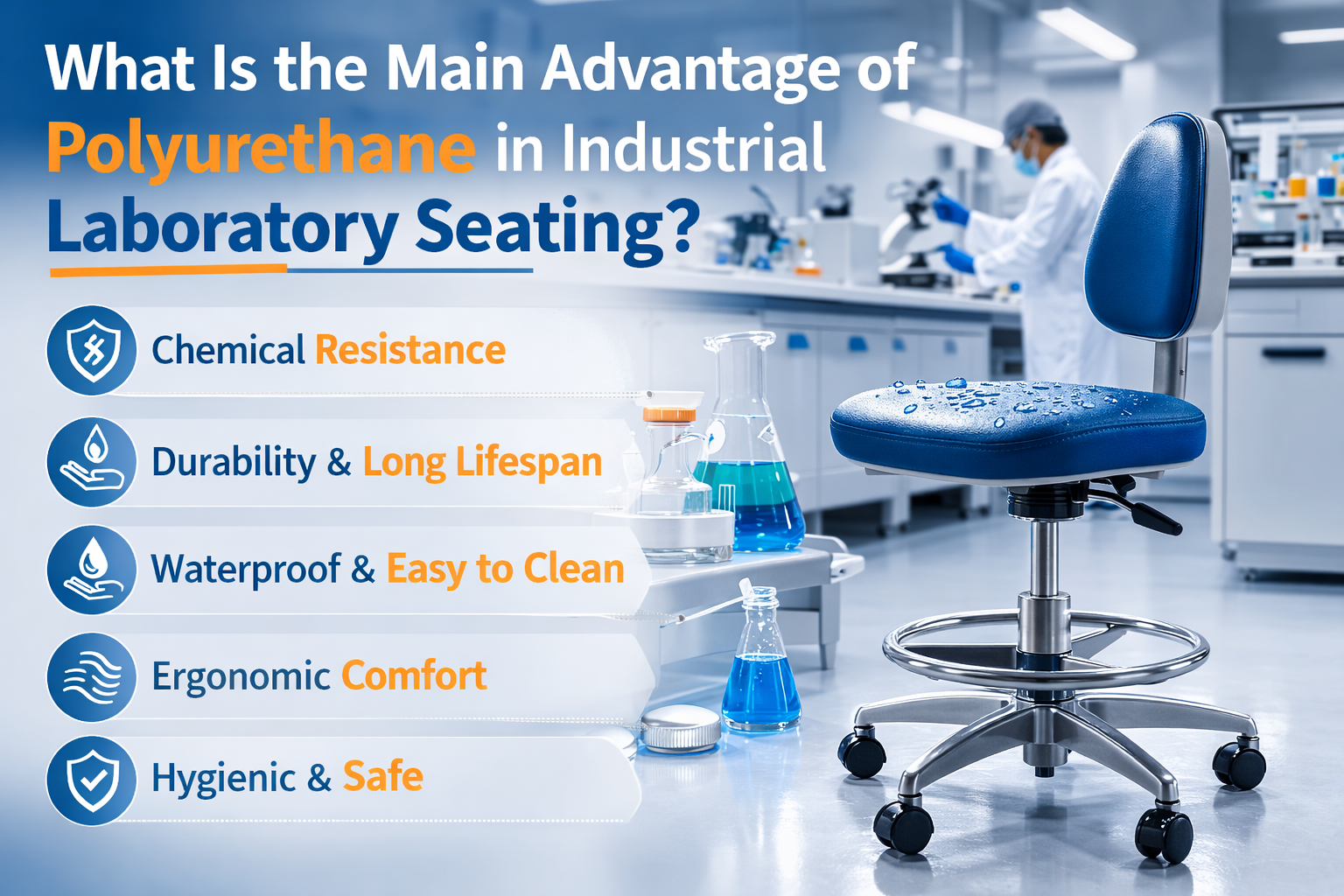
Polyurethane has become one of the most widely adopted materials in professional seating applications across laboratories, manufacturing facilities, and healthcare environments. For procurement managers and equipment buyers, selecting the right seating material directly influences equipment lifespan, operational efficiency, and maintenance costs. Among all available options, polyurethane stands out due to its exceptional durability, hygiene performance, and long-term economic value.
In many industrial environments, seating must withstand heavy daily usage. A typical laboratory chair may be used more than 8 hours per day and can support over 250,000 sitting cycles annually. Traditional fabric or vinyl surfaces often degrade under such conditions. Polyurethane, however, has a dense molecular structure that provides high wear resistance. Studies from industrial furniture manufacturers show that polyurethane seating components can last 35% to 45% longer than standard foam cushions.
One clear example of this material advantage can be seen in the industrial polyurethane with chrome foot ring and casters adjustable laboratory chair. This type of seating system is widely used in laboratories, electronics manufacturing plants, and pharmaceutical environments where durability and stability are critical.
1. Exceptional Durability and Load Capacity
Polyurethane is engineered to withstand significant mechanical stress. Industrial polyurethane seats typically support loads between 120 kg and 180 kg without structural deformation. Compared with traditional padded foam chairs, polyurethane surfaces resist compression and tearing even after years of continuous use. Data from workplace furniture testing shows polyurethane seats maintain more than 90% of their original structural integrity after 100,000 compression cycles.
2. Chemical and Contamination Resistance
Another key advantage of polyurethane is its resistance to chemicals, oils, and laboratory contaminants. In environments such as pharmaceutical labs or electronics production facilities, surfaces may be exposed to solvents, alcohol, or disinfectants daily. Polyurethane surfaces are non-porous, which prevents liquid absorption and allows easy sanitation. This feature significantly reduces the risk of contamination in controlled environments.
Because of this property, many laboratories choose the industrial polyurethane with chrome foot ring and casters adjustable laboratory chair for workstations that require frequent cleaning and sterilization.
3. Cost Efficiency Over the Product Lifecycle
For B2B buyers, the lifecycle cost of equipment is often more important than the initial purchase price. Polyurethane chairs may cost slightly more upfront, but their extended lifespan reduces replacement frequency. Industry procurement studies show that facilities using polyurethane laboratory seating can reduce replacement cycles from every 3 years to every 5–6 years, generating significant cost savings.
Additionally, polyurethane requires minimal maintenance. Unlike fabric chairs that require upholstery replacement or foam repair, polyurethane seats maintain their shape and surface integrity over long periods.
4. Ergonomic Stability and Worker Productivity
Employee comfort and productivity are also critical considerations. Polyurethane seating provides firm yet supportive surfaces that promote healthy posture during long working hours. When integrated with ergonomic designs such as adjustable height, lumbar support, and stable foot rings, polyurethane chairs contribute to improved workplace ergonomics.
This is why many organizations deploy solutions such as the industrial polyurethane with chrome foot ring and casters adjustable laboratory chair, which combines ergonomic adjustability with material durability.
5. Hygienic and Easy to Maintain
Cleanability is essential in clinical and laboratory environments. Polyurethane surfaces are seamless and resistant to bacterial growth. Unlike stitched upholstery, polyurethane does not trap dust or microorganisms. This makes it ideal for healthcare facilities, research labs, and cleanrooms where hygiene standards are strictly regulated.
Maintenance teams can sanitize polyurethane seating with common disinfectants without causing material degradation, reducing cleaning time and operational interruptions.
Conclusion
The primary advantage of polyurethane lies in its ability to combine durability, hygiene, and cost efficiency in demanding professional environments. For B2B buyers in laboratories, manufacturing plants, and healthcare facilities, polyurethane seating offers measurable operational benefits. From longer service life to improved hygiene control, polyurethane continues to be a preferred material in industrial seating solutions.
As workplaces increasingly focus on safety, efficiency, and sustainability, polyurethane-based seating systems will remain a key component of modern industrial furniture design.
READ MORE
Polyurethane Materials and the Future of Industrial Laboratory Seating
The Lifecycle Cost Advantages of Polyurethane Laboratory Seating
Why Industrial Buyers Prefer Polyurethane Laboratory Chairs
Key Performance Benefits of Polyurethane Seating in Industrial Laboratories
How Polyurethane Improves Hygiene Standards in Laboratory Seating
Polyurethane vs Traditional Foam: A Data Driven Comparison for Industrial Seating
Why Polyurethane Materials Dominate Modern Laboratory Chair Manufacturing